
Saturday, September 19, 2015
Our kitchen counter, any given day

Sunday, September 6, 2015
Things we didn’t realize we missed about Spain*
2. The local park sounding like school just got out at 10:30
PM on weekend (and some week) nights. Yes, that means hoards of 2-year-olds,
out playing in the dark.
3. Hanging the laundry out on the folding rack (Heather
only)
4. Coming back in a couple hours and finding that laundry
dry (it’s hot and dry here)
5. Better women’s clothes (Heather and Nora)
6. Managing to have a conversation in a different language
(Heather and Jon only)
7. Hearing three languages spoken (yelled) by the kids at
the pool
8. Having a pool
9. Getting the chills after taking a dip in 99-degree weather (a function of low humidity)
10. The view from the kids’ school:

(mountains more impressive in person)
11. The wild cats that populate Alcobendas
12. Watching west coast baseball games live at breakfast
13. Having friends RIGHT HERE that you can go out and play
with without making a play date (Nathan and Nora)
14. More free time (Nathan)
15. "People always think of you as the American person and
are easier on you" (Nathan)
16. An apartment small enough that I can clean it in an
hour** (Heather)
* This list is separate from the things we knew we missed about Spain, like our friends, our Madrid cousins:

** With the help of disgruntled children
Wednesday, September 2, 2015
This is Heather, horning in on the olive oil fun. Background: for those of you who aren't on facebook and don't see my yearly post, each winter we buy either 8 or 16 unique kinds of dark chocolate (thanks, Whole Foods), Nathan creates brackets, and then we have nightly matches between two different varietals. Taza chocolate (Somerville) almost always wins thanks to a 4-1 majority for Mexican chocolate in the house, but the runner-up is always Whole Foods-brand chocolate, usually from Tanzania or Costa Rica.
In any case, the giant wall of olive oil at the local grocery store...
 ...inspired Nathan to come up with the idea of an olive oil tournament. In the US, the olive oil section of the store contains usually two different processing methods (virgin, extra virgen) multiplied by location (Greece, Italy, Spain). Here, it's olive oil as far as the eye can see, with different price points (around 4-6 euro for glass bottles, less for plastic) processing methods (virgin, extra virgin), regions of origin (all Spanish, of course, but many different parts of Spain), and types of olive (at least 3-4). Which, as you can see, results in a whole lot of olive oil choices.
This complexity suggests a tournament structure more sophisticated than the "a v. b, winner advances" bracket system we've used for chocolate. Stay tuned - Nathan is at work on it.
In any case, the giant wall of olive oil at the local grocery store...

This complexity suggests a tournament structure more sophisticated than the "a v. b, winner advances" bracket system we've used for chocolate. Stay tuned - Nathan is at work on it.

The Olive Oil Chronicles
Sept 2 edition
In the spirit of our family's dark chocolate tournaments, Nathan and Dad and going to try to keep track of our adventures in olive oil. Photo credits go to Nathan. Welcome to the Olive Oil Chronicles - picture above used without permission.
There are many (easily 20 or 30) different kinds of inexpensive but excellent Spanish olive oil - about $5 per liter - and we are going to try many of them. Look for a picture of the olive oil wall in a future post. But today's battle pits Ybarra extra virgin vs. Borges arbequina extra virgin.

The Borges was considered by our tasters to be a pleasant and refreshing olive oil. It is quite mild, with a silky and smooth taste that is very olive-y but without bitterness. Very good for dipping bread into, and also good for cooking. If you note at the bottom of the front of the bottle, you can see that this olive oil rates one drop out of three in terms of "intensidad." It is also "suave y afrutado", which means mild and fruity. So a good choice as a basic mild olive oil.

The Ybarra was very different, in that it is not suave/mild at all. The initial taste of this olive oil is quite bitter, and then after a few seconds the taste is very peppery and spicy. Jon thought it was really good, although on the edge of being too bitter. Other family members thought it might be too spicy for them. Since this is the beginning of our systematic study of olive oils, we don't have a good sense of whether this Ybarra will be among the spiciest that we taste or somewhere in the middle. But stay tuned to find out.
Tuesday, September 1, 2015
Cyprus travelblog
We’re just back from Cyprus, where we….
1. Visited with our friend Charalambos Charalambous
(hereafter, CC). Not just visited with, were thoroughly hosted by CC –
- In numerous trips around the island to see Greek and Roman ruins, Aphrodite’s birthplace, the mountains, and the capital, Nicosea.
- At his parents’ house for a wonderful dinner. Where Seth discovered the Mediterranean grandmother he never had – Charalambos’ mother couldn’t keep her hands off him, and Seth reciprocated by basking in the attention and even giving her a snuggle.
- At a wonderful tavern in the mountains where we ate, and ate, and ate….
2. Managed to get some work in (CC and HCH)
 3. Visited the
occupied side (North Cyprus to the Turkish) of Nicosea with Jon’s friend
Cigdem, who flew in from Ankara to see us. We had lunch in the Büyük Han, a medieval hotel/dining establishment and
then saw the Selimiye Mosque/Saint Sophie Cathedral – spectacular and
fascinating (see left).
3. Visited the
occupied side (North Cyprus to the Turkish) of Nicosea with Jon’s friend
Cigdem, who flew in from Ankara to see us. We had lunch in the Büyük Han, a medieval hotel/dining establishment and
then saw the Selimiye Mosque/Saint Sophie Cathedral – spectacular and
fascinating (see left).
Incidentally, there was recently an interesting NYT story
about a nearby town similarly divided:
http://www.nytimes.com/2015/09/01/world/europe/cyprus-varosha-reunification.html
4. Managed to survive 100-degree days with a lot of time in
the pool:

On the left is the toddler daughter of a Russian Oligarch, who had a grand old time pushing Seth (in the red and white shirt) into the pool.
A few things we noticed:
CC’s mother fed us two dishes: a walnut dish, with walnuts
similar to what you’d see in the US, and “Cypriot walnuts.” Which we’d call
pecans. They’re considered native to the island – of interest to Jon, who’s
from Pecan Central (Georgia). On the occupied side of Nicosea, Jon also spotted
some peas that he also only sees in the south of the US, suggesting that there
may be some Cyprus-Greece-Georgia connection.
Lots and lots and lots of Russians. Everywhere.
We also took our usual tour of the local grocery store. Of
interest:


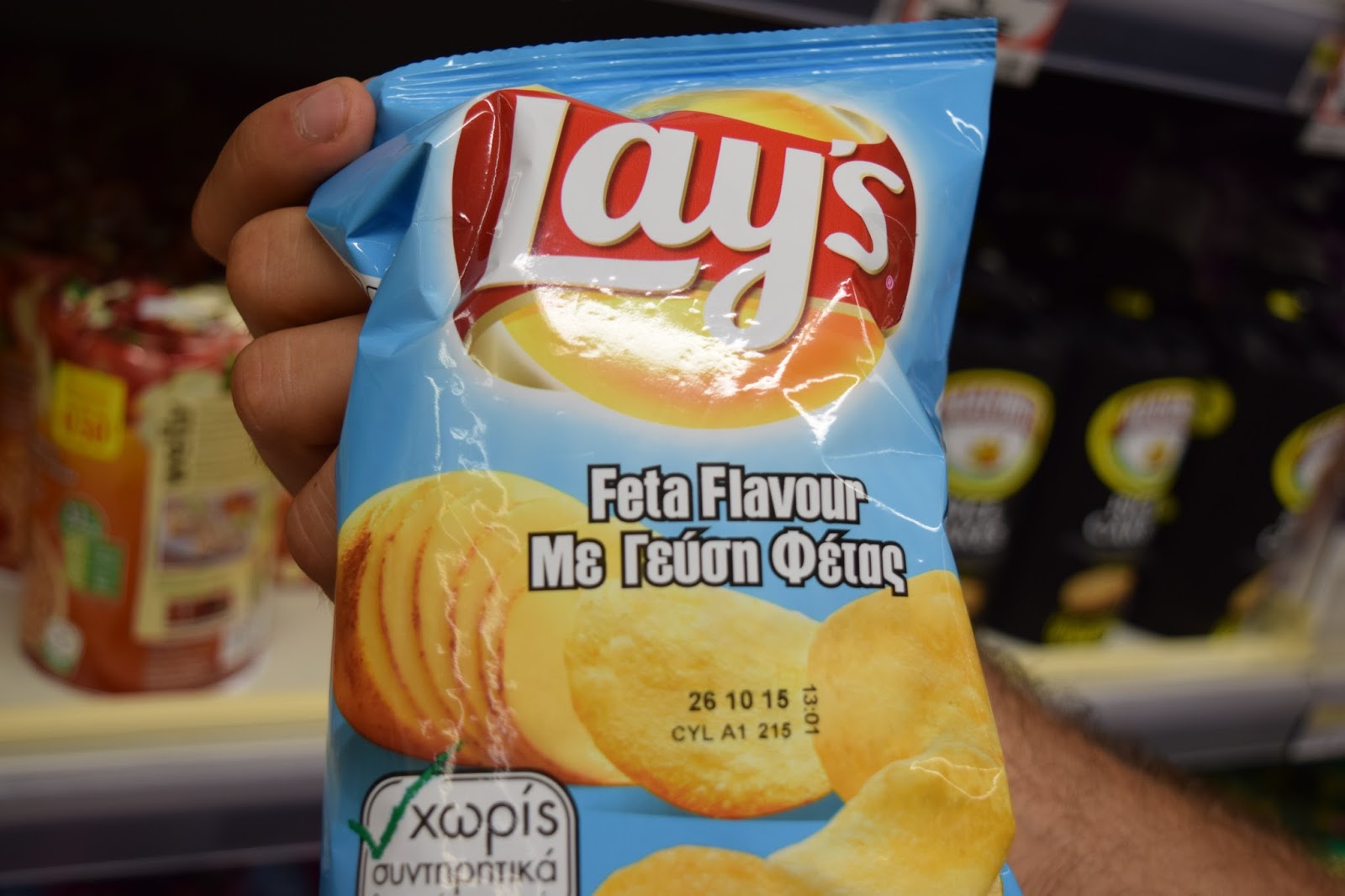

Finally, Jon actually was in Cyprus on legitimate business -- a conference for educational psychologists. Here's a picture of Jon and his crew of doc students/former post-docs (and me) having a working meeting:

Monday, August 31, 2015
Ultimate (not that I am obsessed or anything)
So…it’s our second day in Madrid and we’re walking slowly
home from Ikea, on past the municipal sports complex that is a block from our apartment.
These sports complexes, called polideportivos, are massive – the one nearest
our house has four full-size soccer fields, a track, a large pool, weight room,
outdoor squash courts, padel courts, and tennis courts, multiple playgrounds, and
several other unidentified buildings (?). The polideportivo that’s a bus ride
from our house is even larger and includes a velodrome – I’ll take pictures
when we get over there.
In any case, we’re walking along and hear excited shouting
from the soccer fields, as we often do when going by. Jon peers through the
fencing/bushes to see what’s going on and announces it’s a game of ultimate. I was struck dumb; as far as I could tell from a web
search, ultimate in Spain is mostly played in downtown Madrid at an incredibly
bad time (5 PM Saturdays, which to the Spanish is like 2 PM Saturday, or even like
noon Saturday, but to Americans living in Madrid is still like 5 PM Saturday).
Having thus given up ultimate for the remainder of at least ’15, I was curious whether I was going to be compelled to un-give-it-up because
of the presence of a local league.*
A trip to the fields revealed not a city league, but instead
the co-ed Southern European regionals -
three teams from Spain (Madrid, Santander, Girona) plus Portugal, France and
Switzerland. Some quick observations (skip if you don’t play ultimate):
1. Much bigger teams – one had about 30 players.
2. More women, and more excellent women. I never saw fewer
than three women on the field at a time, and saw a few points with 4W/3M. There
was always at least one woman handler, sometimes two.
3. Lots more yelling.
4. But also a lot fewer on-field disputes. And no observers.
5. Major delay of game problems – after each point the
entire team runs on the field, cheers, and then kneels down and calls a line.
CBS Sports would never figure out how to package this for the TV audience.
6. The level of play
looked comparable to a typical U.S. Midwestern regionals – generally solid
though some throw-aways and drops. However, it was very windy both days, which
may have caused some issues.
Madrid won the tournament, beating Girona 15-9.
* My feet and lower back had a lot to say on the
un-giving-up-ultimate idea.
Thursday, August 27, 2015
Visiting Al Campo
One of my (Heather’s) favorite things to do in Madrid (or
anywhere, actually) is to grocery shop. Last time we lived in Spain, I became very
attached to our local grocery store, Al Campo; Seth and I would go two or three
times a week while Jon took the big kids to their after-school swim lessons. So
I was particularly excited to go back.
My first stop at Al Campo was the wall of ham:

A leg of ham is a staple in many Spanish kitchens; prices
run from about $60 on upwards (just passed a ham in a store window sporting a
$500 price tag).
Next stop was the aisle of Manchego:

The picture doesn’t do this justice – it’s really almost a
whole grocery aisle filled with Manchego. Except none of it is labeled as
Manchego; in Spain most cheese seems to be Manchego, and thus labeling it Manchego
would be like calling cheese cheese in the U.S. Non-Manchego is clearly marked
(mostly as goat cheese).
Next I said hello to real Spanish chorizo:

No more traveling to Las Ventas in South Boston to restock
twice a year.
Next stop, the cereal aisle, where you can buy candy for
breakfast:

And Al Campo-brand cereals marketed as a sugar drug:


And where the proportion of suitable options for health-conscious
American children (well, to their sugar-averse parents) has shrunk owing to what
looks like a chocolate cereal craze:


There is no apparent irony in the chocolate-flavored fitness
cereal. I should note that this aisle is separate from the “breakfast cookie”
aisle, which is elsewhere in the store.
Next I walked by the table wine:

Note the prices – yes, that’s about $2 for what is a
pretty decent bottle of Rioja. We sampled a lot of these last time we were here
(though I remember the prices being a bit higher, more like $5 a bottle).
A short distance away is the eco-wine aisle:

A two to four times the price of chemically-wrought wine,
still a bargain.
Last stop was check-out. No picture here, but remarkably, I
didn’t get yelled at by the clerk for some grocery-store-etiquette infraction. Progress.
Subscribe to:
Posts (Atom)